

🇨🇦 Canada Education System – Balance Between Performance and Inclusion
1. Historical Overview of the Canada Education System
The Canada Education System reflects the country’s bilingual and multicultural identity. Its origins are rooted in British and French colonial traditions. In New France, religious orders such as the Jesuits and Ursulines established some of the earliest schools in the 17th century. Under British rule, education gradually expanded, but it remained regionally controlled and uneven in quality.
In the 19th century, several provinces passed laws to create public schooling systems, emphasizing literacy, civic duty, and moral education. Unlike highly centralized systems such as France’s, Canada’s education remained decentralized, shaped by provincial and territorial governments.
The Constitution Act of 1867 gave provinces full authority over education, a principle that still defines the Canadian model today. As a result, each province and territory developed its own curriculum, policies, and funding mechanisms. This autonomy ensures flexibility and regional adaptation but also leads to variation across the country.
Post-World War II, Canada expanded access to secondary education and invested heavily in higher education to meet the demands of a growing economy. Multiculturalism, official bilingualism, and inclusion of Indigenous perspectives became central themes in the late 20th and early 21st centuries.
Key Figures:
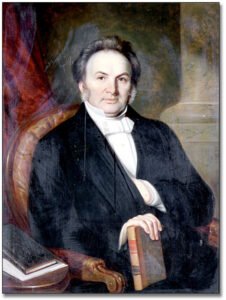
Egerton Ryerson (1803–1882) – Known as the “Father of Public Education” in Canada, he championed free, mandatory schooling in the 19th century.
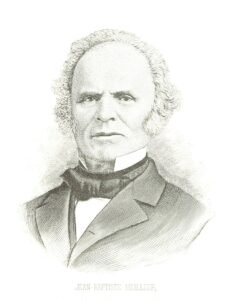
Jean-Baptiste Meilleur (1796–1878) – Advocate for public education in French Canada.
2. Philosophy & Core Principles of the Canada Education System
The Canada Education System aims to balance academic excellence with inclusion, diversity, and equity. Schools are designed to reflect the country’s values of multiculturalism and bilingualism while ensuring equal access to quality education for all.
Core Elements of the Canada Education System
- Universal access to free public education from kindergarten through secondary school.
- Bilingualism – English and French are both official languages, with French immersion programs widely available across provinces.
- Inclusive education – strong emphasis on integrating students with special needs and ensuring equal opportunities.
- Community involvement – parents and local communities actively participate in school governance and activities.
- Flexibility – provinces adapt curricula to reflect local culture, history, and priorities.
3. Current Structure of the Canada Education System
(Varies slightly by province)
Elementary School: Grades 1–6 or 1–8
Secondary School: Grades 7–12 or 9–12
Post-secondary: Colleges, universities, and vocational programs (Canada has some of the top universities like University of Toronto, McGill, and UBC)
4. Strengths & Challenges of the Canada Education System
✅ Strengths:
The Canada Education System has several enduring strengths:
- Equity and inclusion – minimal disparities across regions and social groups.
- High literacy and numeracy rates – Canadian students perform strongly on international benchmarks.
- Multicultural adaptability – schools integrate newcomers smoothly, with special support for immigrant and refugee students.
- Bilingual competence – French and English education strengthens cultural identity and global competitiveness.
- Strong higher education sector – Canada is home to world-class universities that attract students globally.
Challenges include regional disparities, particularly in Indigenous education. Many Indigenous communities face limited resources, lower graduation rates, and systemic inequalities. Addressing these gaps remains a priority in achieving reconciliation and equity.
Another challenge is maintaining quality and equity while adapting to rapid demographic changes, such as immigration growth and increasing linguistic diversity.
⚠️ Challenges:
Significant disparities between provinces and Indigenous communities
Underfunding in some rural and remote areas
5. PISA Ranking of the Canada Education System
2022: Ranked in the global top 10 in reading and science.
Global Recognition and PISA Results
The Canada Education System is internationally recognized for high performance, particularly in reading, mathematics, and science. In PISA 2022, Canada ranked among the top 10 countries worldwide, performing above the OECD average in all three domains.
A notable strength is equity: Canada consistently shows one of the smallest performance gaps between students of different socioeconomic backgrounds. This reflects strong policies for inclusion, immigrant integration, and support for disadvantaged students.
Canada also attracts international students. Its universities are globally ranked, and Canadian diplomas are widely respected, contributing to the country’s appeal as an education destination.
📚 More Reading on the Canadian Education System:
The Structure of Canadian Education – Council of Ministers of Education, Canada
Education in Canada: An Overview – Statistics Canada report
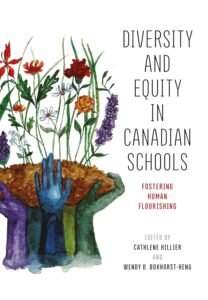
Diversity and Education in Canada – James A. Banks
💡 Fun Fact: In many Canadian schools, students take part in “Terry Fox Runs” each year, honoring the national hero who ran across Canada to raise funds for cancer research.


What they say about
The OECD highlights Canada’s education system as one of the most inclusive and equitable in the world. Reports emphasize its strong literacy results, multicultural approach, and commitment to equal opportunities for all students. Canada consistently ranks among the top-performing countries in international assessments, reflecting its balance of quality and accessibility.