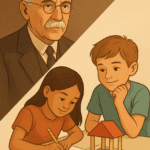
“Education is an atmosphere, a discipline, a life.”
Charlotte Mason (Charlotte Mason Method)
Charlotte Mason – Biography and the Charlotte Mason Education Philosophy
Biography:
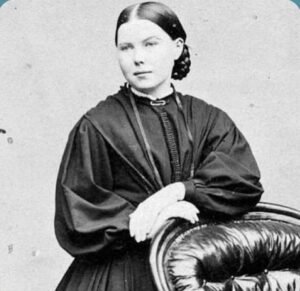
Charlotte Mason (1842–1923) was a British educator whose philosophy has inspired teachers, parents, and homeschoolers worldwide. At a time when education was rigid and heavily based on memorization, she introduced a humane and refreshing vision centered on respect for the child as a whole person.
Mason founded the Parents’ National Educational Union (PNEU) in the late 19th century, bringing her ideas into homes and classrooms across Britain. She also established a teacher training college in Ambleside, England, where educators were trained in her philosophy. Her six-volume series Home Education remains foundational for followers of the Charlotte Mason education method.
She rejected the view of children as empty vessels, emphasizing instead that they are “born persons” with intellectual and moral dignity, capable of limitless growth when nurtured through meaningful experiences.
Key Book:
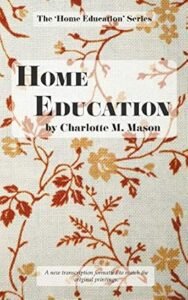
📘 Home Education (1886) – In this seminal work, Mason presents her philosophy and practical methods for teaching children at home, emphasizing the importance of literature, nature, and the formation of character.
Disclosure: As an Amazon Associate, we earn from qualifying purchases.
The Charlotte Mason Education Explained
The Charlotte Mason education approach promotes a broad and rich liberal arts curriculum rooted in literature, nature, art, and music. Instead of rote memorization, children learn through living books—narrative, high-quality works that engage imagination.
A distinctive feature of the method is narration, where children retell in their own words what they have read, reinforcing comprehension and memory. Lessons are intentionally short to sustain focus and leave space for curiosity and exploration.
Mason also valued nature study, encouraging daily outdoor time, observation, and drawing. Cultural subjects such as art, music, and poetry were woven into everyday learning, cultivating appreciation for beauty and creativity.
Core Principles of Charlotte Mason Education
Use of living books over dry textbooks.
Habit training as part of character and discipline.
Daily time in nature to nurture curiosity and observation.
Respect for the child as a whole person.
Short lessons and narration to strengthen comprehension.
Global Reach and Recognition of The Charlotte Mason Education
Though developed in 19th-century England, Charlotte Mason education has spread worldwide, especially within homeschooling communities in the United States, Canada, and Australia. Organizations such as Ambleside Schools International adapt her philosophy for modern contexts.
Her writings have been republished in recent decades, sparking renewed global interest. Online communities, teacher training programs, and curricula based on Mason’s ideas continue to grow, ensuring her legacy remains strong.
Strengths and Lasting Impact of The Charlotte Mason Education
The Charlotte Mason education model is admired for its deep respect for children as individuals. Its focus on literature, nature, and the arts nurtures intellectual growth, creativity, and moral development. The emphasis on habit formation builds discipline and resilience, while short lessons make learning less overwhelming.
Although implementation in modern public schools may face challenges due to testing pressures, the method thrives in homeschooling and private settings. Students often develop strong language skills, cultural literacy, and a lifelong love of learning.
More than a century later, Charlotte Mason’s philosophy endures as a holistic, humane approach that blends knowledge, beauty, and respect for children’s potential.
More Books About
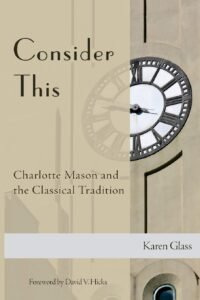
Consider This: Charlotte Mason and the Classical Tradition – Karen Glass
→ A thoughtful exploration of how Charlotte Mason’s educational philosophy aligns with classical education, offering practical ways to blend the two approaches.
Disclosure: As an Amazon Associate, we earn from qualifying purchases.
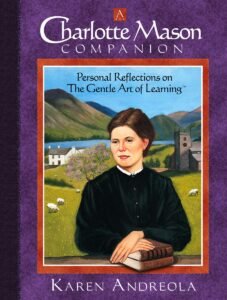
A Charlotte Mason Companion: Personal Reflections on the Gentle Art of Learning – Karen Andreola
→ A warm, detailed guide filled with personal stories, offering inspiration and practical advice for applying Charlotte Mason’s gentle yet rigorous teaching style at home.
Disclosure: As an Amazon Associate, we earn from qualifying purchases.
What they say about

Charlotte Mason’s philosophy has been studied by global researchers, who emphasize its relevance in modern education. Scholars note how her focus on nature, living books, and gentle discipline aligns with UNESCO’s calls for child-centered learning.
📊 Quick Stats
Hundreds of schools and homeschools worldwide use Charlotte Mason philosophy (CM Institute)
Active CM communities in UK, US, Canada, Australia (CM Network)
10+ teacher training centers and societies globally (CM Institute)
Nature study weekly in most CM programs (CM philosophy)
Living Books approach central to all CM curricula (CM writings)