
🇫🇮 Finland Education System – A Global Model in Education
1. Historical Overview of the Finland Education System
The Finland Education System is widely recognized as one of the most progressive and equitable in the world. Its roots go back to the 19th century, when the folk school movement sought to provide basic literacy for all citizens. This early focus on universal access laid the foundation for the reforms of the 1970s, which transformed Finland’s schools into a model of equity and excellence.
After World War II, Finland prioritized education as a tool for rebuilding society and supporting economic development. Heavy investment in teacher training and school infrastructure ensured that high-quality education was available across the country, even in rural areas. The landmark reforms of the 1970s established a comprehensive school system where all children, regardless of background, attended the same type of school until the end of lower secondary education. This eliminated early tracking and reinforced the principle of equality of opportunity.
By the 1990s, Finland’s education reforms had matured into a coherent system that attracted global attention. When the first results of the OECD’s Programme for International Student Assessment (PISA) were published in 2001, Finland’s 15-year-olds ranked among the top performers worldwide in reading, mathematics, and science. Since then, Finland has been studied as a global benchmark for successful education policy.
Key Figure:
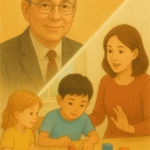
Pekka Kuusi (1917–2004) – A social reformer whose policies emphasized equality in education.

2. Philosophy & Core Principles of the Finland Education System
The philosophy of the Finland Education System emphasizes equity, well-being, and a child-centered approach. Unlike many countries, Finland does not rely on standardized testing as the primary measure of success. National exams are introduced only at the end of secondary school, allowing students to learn without the constant pressure of tests.
Early education prioritizes play, creativity, and social development rather than rote academics. Children usually start formal schooling at age 7, but high-quality early childhood programs are available before that age, focusing on socialization, outdoor play, and curiosity-driven learning.
Core Elements of the Finland Education System
- Free, high-quality public education available to all students, from preschool through university.
- Minimal homework in primary school, allowing time for play, family, and extracurricular activities.
- Highly trained teachers – all teachers are required to hold a master’s degree in education.
- Strong emphasis on play and outdoor activities in early years to support holistic development.
- Teacher autonomy – educators are trusted to design lessons and assessments that meet student needs.
- Equity of access – regardless of family income or region, students receive the same standard of education.
3. Current Structure of the Finland Education System
Pre-primary Education: From age 6, focusing on social and emotional skills
Comprehensive School: Ages 7–16, same school for all children (no streaming)
Upper Secondary: General or vocational track
Higher Education: Free universities and polytechnics
4. Strengths & Challenges of the Finland Education System
✅ Strengths:
The Finland Education System is admired for balancing academic success with student well-being. Strengths include:
- Equity and inclusion – schools are designed to serve every child, regardless of background.
- Teacher professionalism – educators enjoy high social status and autonomy, ensuring quality teaching.
- Holistic development – focus on creativity, arts, and social skills alongside core academics.
- Work-life balance for students – limited homework and emphasis on outdoor play promote health and happiness.
- Global inspiration – many countries study Finland’s system to replicate its successes in their own contexts.
Critics note that Finland’s PISA performance has declined somewhat since its peak in the early 2000s, particularly in mathematics. However, the country continues to outperform most OECD nations while maintaining equity and well-being as central goals.
⚠️ Challenges:
Recent slight decline in PISA scores
Adapting to technological change while keeping balance
5. PISA Ranking of the Finland Education System
2022: Among the top 10 globally in reading and science, slightly lower in math compared to 2000s peak.
Global Recognition and PISA Results
Finland’s reputation was cemented through its strong performance in international benchmarks such as PISA. In PISA 2022, Finnish students scored 484 in mathematics and 490 in reading, both above the OECD averages (472 and 476 respectively). In science, Finland also remained among the high-performing nations, maintaining its global reputation for excellence.
One of the standout features of the Finland Education System is the small gap in performance between high- and low-achieving students. Socioeconomic background has a weaker impact on academic results compared to most OECD countries. This equity-driven outcome is a direct result of policies that prioritize inclusivity, teacher support, and equal funding across schools.
Finland has also achieved these results while keeping class sizes moderate, reducing stress on students, and avoiding high-stakes accountability systems. The system proves that world-class outcomes can be achieved without constant testing or intense competition.
📚 More Reading on the Finnish Education System:
Finnish Lessons 3.0 – Pasi Sahlberg → Insights from an insider on Finland’s reforms
Teach Like Finland – Timothy D. Walker → Practical tips from Finnish classrooms
Let the Children Play – Pasi Sahlberg & William Doyle → Why play-based learning matters
💡 Fun Fact: In Finnish schools, recess is mandatory every hour—rain or shine!



What they say about
The OECD ranks Finland as one of the top education systems in the world. Reports highlight its equity, trust in teachers, and innovative teaching practices as key reasons for its global success.