

What they say about

UNICEF recognizes outdoor and play-based approaches, such as Forest Schools, as vital for children’s emotional, physical, and social development. Nature-based education is praised for building resilience and curiosity

Biography:
Ella Flautau, a Danish educator, is credited with initiating the modern Forest School movement in the 1950s. Inspired by the Scandinavian concept of friluftsliv—the philosophy of open-air living—she sought to create learning environments where children could thrive outside the confines of traditional classrooms.
The first Forest School emerged in Denmark, where Flautau and other educators observed how children developed resilience, independence, and confidence through regular immersion in nature. Over time, the concept spread across Scandinavia and later to the United Kingdom, North America, and beyond. While each country adapted the model to local contexts, the underlying philosophy remained the same: that children learn best when engaged in meaningful, hands-on experiences in the natural world.
Key Book:
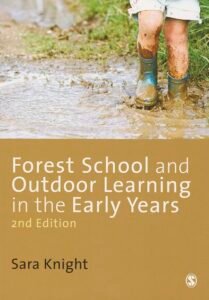
📘 Forest School and Outdoor Learning in the Early Years (Sara Knight, 2009) – While not written by Flautau, this comprehensive resource captures the philosophy and practice of Forest Schools inspired by her vision.
Disclosure: As an Amazon Associate, we earn from qualifying purchases.
The Forest School Approach emphasizes outdoor, experiential learning as the foundation of child development. Children spend significant portions of their school day in forests, parks, or natural settings, regardless of weather conditions. Activities are largely child-led, encouraging exploration, risk-taking, and problem-solving in a safe but challenging environment.
Teachers in Forest Schools act as facilitators rather than directors, supporting children’s curiosity while allowing them to set their own pace. The focus is not only on academic skills but also on social, emotional, and physical growth. By engaging directly with nature, children develop practical life skills, creativity, and a strong sense of environmental stewardship.
Since its beginnings in Denmark, the Forest School movement has expanded worldwide. The United Kingdom is now home to thousands of Forest School programs, supported by the Forest School Association (FSA), which provides training and accreditation for educators. Similar initiatives have been established in Canada, the United States, Australia, and many European countries.
Forest Schools are often integrated into existing education systems, either as full-time programs or as regular outdoor learning days. They have gained recognition for their role in improving children’s well-being, resilience, and engagement, particularly for those who may struggle in traditional classroom environments.
The greatest strength of the Forest School Approach is its ability to nurture holistic development. Children build confidence, independence, and problem-solving skills while also improving physical health and emotional well-being. Research highlights benefits such as increased self-esteem, better social skills, and stronger environmental awareness.
Critics sometimes question whether Forest Schools provide enough academic rigor or whether they can be scaled within urban settings. However, advocates argue that the approach complements traditional education by developing qualities often overlooked in standard curricula.
Today, the Forest School Approach is celebrated globally as a model of experiential learning that reconnects children with nature. In an era of increasing screen time and urbanization, it provides an invaluable opportunity for young people to rediscover the outdoors, develop resilience, and cultivate a lifelong respect for the natural world.
More Books About
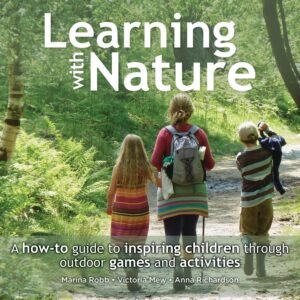
Learning with Nature: A How-to Guide to Inspiring Children Through Outdoor Games and Activities – Marina Robb, Victoria Mew, Anna Richardson
→ A practical handbook packed with seasonal activities, games, and projects designed to connect children with nature, encouraging teamwork, creativity, and physical development.
Disclosure: As an Amazon Associate, we earn from qualifying purchases.
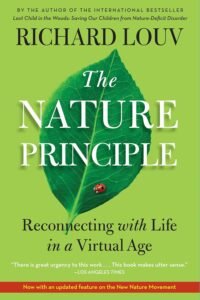
The Nature Principle: Reconnecting with Life in a Virtual Age – Richard Louv
→ A compelling call to balance technology with nature, showing how regular contact with the outdoors boosts creativity, mental health, and academic performance.
Disclosure: As an Amazon Associate, we earn from qualifying purchases.
What they say about
UNICEF recognizes outdoor and play-based approaches, such as Forest Schools, as vital for children’s emotional, physical, and social development. Nature-based education is praised for building resilience and curiosity
📊 Quick Stats
Thousands of Forest School programs worldwide (Forest School Association)
1:6–1:10 child–adult ratio common (FSA)
80%+ parental approval in program evaluations (Survey data)
20+ countries with certified Forest School training providers (FSA)
Significant growth since 2010 in UK, Scandinavia, North America (FSA)