
What they say about
Germany’s dual education system is recognized worldwide. The OECD highlights how its combination of vocational training and academic rigor ensures strong workforce readiness.
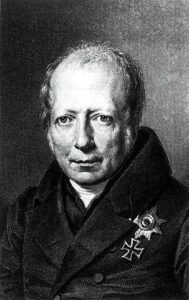
The Germany Education System has deep roots in the 18th and 19th centuries, strongly influenced by Prussian reforms and the educational philosophy of Wilhelm von Humboldt. Prussia was among the first states to introduce compulsory education, recognizing the importance of literacy, discipline, and civic responsibility for nation-building. Humboldt promoted the idea of a holistic education that combined intellectual, moral, and physical development.
By the late 19th century, Germany had developed a rigorous system of primary and secondary education, which became a model for many countries worldwide. The early focus on structured schooling, professional teacher training, and a strong academic curriculum gave Germany a reputation for educational excellence.
After World War II, the system was restructured, with West and East Germany developing separate models until reunification in 1990. Since then, education has remained under the jurisdiction of the Länder (federal states), creating diversity within a common national framework.
Today, Germany is known for its combination of strong academic standards and world-renowned vocational training programs, which contribute significantly to its economic success.
Key Figure:
Wilhelm von Humboldt (1767–1835) – Philosopher and linguist, architect of the “Humboldtian model” of education, emphasizing academic freedom and well-rounded knowledge.
The Germany Education System emphasizes rigor, structure, and early differentiation. Students are typically tracked into different pathways based on academic performance, interests, and teacher recommendations, often around the age of 10–12. This system values both academic excellence and practical skills.
Core Elements of the Germany Education System
Grundschule: Primary school (Grades 1–4, sometimes 1–6)
Secondary Education:
Gymnasium → academic path leading to university
Realschule → intermediate education leading to technical/vocational paths
Hauptschule → basic general education
Gesamtschule → comprehensive school combining paths
Higher Education: Universities (research-focused) and Fachhochschulen (applied sciences)
✅ Strengths:
The Germany Education System has several notable strengths:
Challenges include concerns about early tracking, which can reinforce social inequalities. Students placed in lower tracks at a young age may have fewer opportunities to change pathways later. Additionally, immigrant and disadvantaged students often face barriers to achieving the same success as their peers.
Reforms in recent decades have aimed to address these issues by offering more flexible transitions between tracks, expanding all-day schools, and increasing support for diverse learners.
⚠️ Challenges:
Early tracking may limit opportunities for late bloomers
Regional differences in curriculum and quality
2022: Above OECD average in reading, math, and science, with particularly strong vocational training outcomes.
Global Recognition and PISA Results
Germany is widely recognized for its innovative vocational training programs. The Dual System is often cited as a model of how education can directly support industry needs and reduce youth unemployment.
In PISA 2022, Germany scored above the OECD average in reading, mathematics, and science, though slightly below top performers like Japan and Singapore. Importantly, Germany has made progress since early 2000s reforms, when PISA revealed lower-than-expected performance and significant disparities. Efforts to improve equity and modernize curricula have led to steady gains.
📚 More Reading on German Education:
The German Education System and the Dual Model – H. Reinisch
Wilhelm von Humboldt and the Reform of Education – C. Menze
Vocational Education in Germany: Strengths and Challenges – OECD
💡 Fun Fact: Germany’s apprenticeship system dates back to medieval guilds and is still one of the most respected vocational training models in the world.
Book About:
→ Historical perspective on how education shaped modern German society.
Disclosure: As an Amazon Associate, we earn from qualifying purchases.
Prussia and the German System of Education – Arthur Bott
→ Explains the origins of the Prussian model and its influence on Germany’s structured education system.
Disclosure: As an Amazon Associate, we earn from qualifying purchases.
What they say about
Germany’s dual education system is recognized worldwide. The OECD highlights how its combination of vocational training and academic rigor ensures strong workforce readiness.
📊 Quick Stats
PISA 2022 near OECD average (OECD)
Compulsory education: 9–10 years depending on state (Germany MOE)
Strong dual vocational system with apprenticeships (OECD)
Regional performance variation across Länder (OECD)
Large socioeconomic gaps in outcomes (OECD)