


What they say about
International research, including reports referenced by OECD countries, highlight how the Kumon method strengthens math and reading skills. Its structured repetition is recognized as a tool for academic success worldwide.
Biography:
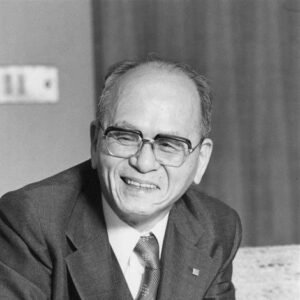
Toru Kumon (1914–1995) was a Japanese educator and mathematics teacher whose personal experience as a parent gave birth to one of the most widespread after-school learning systems in the world. In the 1950s, his young son was struggling with math in elementary school. To help him improve, Kumon began creating a series of worksheets that broke mathematical concepts into small, incremental steps. His goal was to build mastery and confidence by allowing his son to progress independently at his own pace.
The results were remarkable. Kumon’s son not only improved in mathematics but also developed self-discipline, persistence, and problem-solving skills. Soon, other parents became interested, and what started as a home project grew into a global educational movement. Toru Kumon officially founded the Kumon Institute of Education in 1958, and the method quickly spread throughout Japan and later across the world. Today, the Kumon Method is applied to both math and reading, and it remains one of the most popular supplemental education systems internationally.
Key Book:
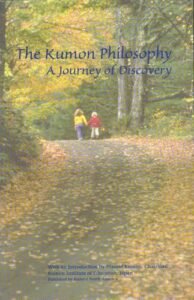
📘 The Secret of Kumon Maths (1974) – Written by Toru Kumon, this book explains the philosophy behind the method, its emphasis on self-paced learning, and how gradual progression develops mastery and confidence.
Disclosure: As an Amazon Associate, we earn from qualifying purchases.
The Kumon Method focuses on self-learning, daily practice, and incremental progress. Students work on carefully designed worksheets that gradually increase in difficulty, ensuring that each new step builds naturally on previously mastered skills. The approach emphasizes repetition, accuracy, and fluency before advancing to more complex concepts.
Unlike traditional tutoring, Kumon is not about cramming for tests or memorizing information. Instead, it is about fostering independence and self-motivation. Teachers, known as “instructors,” do not directly teach lessons but rather guide students, observe their progress, and provide encouragement. This allows children to take responsibility for their learning, develop confidence, and experience the satisfaction of solving problems on their own.
From its origins in Japan, the Kumon Method has expanded to over 50 countries, with more than 26,000 learning centers worldwide. Millions of children have benefited from Kumon programs, making it the largest after-school education franchise in the world. The method is especially popular in Asia, North America, and Latin America, where parents often view it as a way to supplement school education and give their children an academic edge.
Kumon’s success lies in its adaptability: the same principles can be applied regardless of culture, language, or educational system. This universality has helped it maintain global relevance for over six decades.
The strength of the Kumon Method lies in its simplicity and consistency. By emphasizing daily practice and incremental progress, it develops not only academic ability but also persistence, focus, and a growth mindset. Students often report higher confidence levels and improved problem-solving skills after sustained participation.
Critics sometimes note that the repetitive nature of the worksheets can be monotonous, or that the focus on math and reading is narrow compared to broader educational philosophies. However, supporters argue that Kumon’s strength lies in building strong academic foundations that support further learning in all subjects.
Today, the Kumon Method continues to empower millions of children around the world. By focusing on independence, mastery, and lifelong learning skills, it remains one of the most influential supplemental education programs in history.
More Books About
Every Child an Achiever: A Parent’s Guide to the Kumon Method – David W. Russell
→ A parent-focused introduction to the Kumon approach, explaining how daily practice and a mastery-based progression build academic confidence and independence.
Disclosure: As an Amazon Associate, we earn from qualifying purchases.
Disclosure: As an Amazon Associate, we earn from qualifying purchases.
What they say about
International research, including reports referenced by OECD countries, highlight how the Kumon method strengthens math and reading skills. Its structured repetition is recognized as a tool for academic success worldwide.
📊 Quick Stats
26,000 Kumon centers worldwide (Kumon Global, 2023)
4 million+ enrolled students historically (Kumon Global, 2023)
Kumon operates in 50+ countries (Kumon Global)
Average tuition cost ranges $40–$200/month depending on country (Market data)
Tens of thousands of Kumon instructors worldwide (Kumon Global)