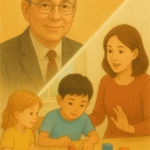
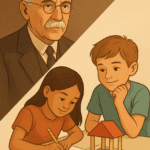
« L’educazione è un aiuto alla vita. »
“Education is a help to life.”
Maria Montessori (Montessori Method)
Maria Montessori – Biography and the Montessori Method Philosophy
Biography:
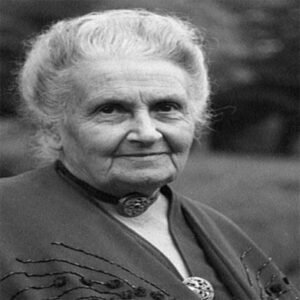
Maria Montessori (1870–1952) was an Italian physician, educator, and visionary who transformed the way the world views early childhood education. She was the first woman in Italy to graduate in medicine, a groundbreaking achievement that shaped her scientific approach to education. Montessori began her career working with children with special needs, carefully observing how they interacted with their environment. She discovered that when children were given freedom, responsibility, and access to carefully designed materials, they showed remarkable progress not only in academic skills but also in confidence, independence, and social behavior.
Her philosophy challenged the rigid, teacher-centered schooling of the early 20th century. Instead of treating children as passive recipients of knowledge, Montessori saw them as active learners with an innate drive to explore and discover. She founded her first Casa dei Bambini (“Children’s House”) in Rome in 1907, which became the model for the Montessori Method. Over her lifetime, she trained thousands of teachers, wrote influential books, and established associations that ensured her legacy would continue long after her passing. Today, her ideas inspire educators, parents, and policymakers in more than 140 countries, making the Montessori Method one of the most enduring and impactful educational approaches in the world.
Key Book:
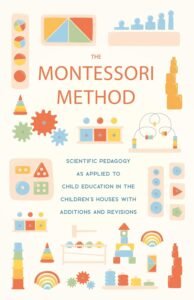
📘 The Montessori Method (1912) – This foundational book outlines her educational philosophy, the importance of a prepared environment, and the role of the teacher as a guide rather than a lecturer.
Disclosure: As an Amazon Associate, we earn from qualifying purchases.
The Montessori Method Explained
The Montessori Method is a child-centered approach that emphasizes independent, hands-on learning within a carefully prepared environment. Unlike traditional classrooms, where teachers lead and students follow, the Montessori classroom allows children to make choices about their activities, encouraging self-motivation and curiosity. Teachers, often referred to as “guides,” observe and support each child’s individual progress rather than delivering standardized lectures.
Core Principles of the Montessori Method
- Child-centered learning – every aspect of the classroom is designed around the needs and interests of the child.
- Prepared environment – specialized, self-correcting materials promote exploration, problem-solving, and independence.
- Mixed-age classrooms – older children reinforce their knowledge by helping younger ones, while younger children are inspired by peers.
- Freedom within limits – children enjoy autonomy but within a structured framework that fosters discipline and responsibility.
- Learning through the senses – the Montessori Method emphasizes concrete experiences before abstract thinking, engaging all five senses.
Global Reach and Recognition of the Montessori Method
Today, there are more than 15,000 Montessori schools worldwide, serving children from early childhood through adolescence. The method has been adopted in both private and public education systems, with programs flourishing in North America, Europe, Asia, and beyond. Organizations such as the Association Montessori Internationale (AMI) and the American Montessori Society (AMS) continue to uphold and expand her legacy.
The Montessori Method has influenced not only schools but also parenting practices, teacher training, and educational policy. Studies have shown that Montessori students often demonstrate higher levels of academic achievement, creativity, social skills, and emotional regulation compared to peers in conventional settings.
Strengths and Lasting Impact of the Montessori Method
One of the greatest strengths of the Montessori Method is its ability to cultivate intrinsic motivation. Because children are free to follow their interests, they learn not only core subjects like math and language but also responsibility, concentration, and respect for others. The emphasis on collaboration, problem-solving, and real-world skills prepares children for lifelong learning in an ever-changing world.
Montessori’s philosophy also resonates strongly in today’s educational landscape, where creativity, independence, and critical thinking are considered essential for success. By blending structure with freedom, the Montessori Method continues to offer a holistic and future-ready model of education.
More Books About
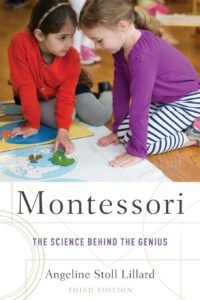
Montessori: The Science Behind the Genius – Angeline Stoll Lillard
→ A modern, research-based analysis of the Montessori approach.
Disclosure: As an Amazon Associate, we earn from qualifying purchases.
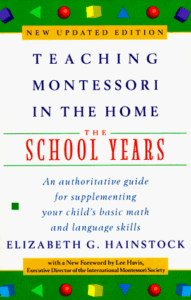
Teaching Montessori in the Home: The Pre-School Years – Elizabeth G. Hainstock
→ A practical guide for parents applying Montessori at home.
Disclosure: As an Amazon Associate, we earn from qualifying purchases.
What they say about

UNESCO recognizes Montessori education as a method that fosters independence, creativity, and holistic child development. Reports highlight how Montessori classrooms support self-directed learning and adaptability, skills that UNESCO considers essential for 21st-century education
📊 Quick Stats
15,763 Montessori schools worldwide (Global Montessori Census, 2022)
≈ 9% of Montessori schools are government-funded (Global Montessori Census, 2022)
3,552 schools participated in the Montessori Census (Montessori Census, 2022)
5,000 Montessori schools connected to the Montessori Foundation across 50+ countries (Montessori Foundation)