
🇸🇬 Singapor Education System – Excellence and Precision in Education
1. Historical Overview of the Singapor Education System
The Singapor Education System has become one of the most admired in the world, thanks to its rapid evolution and consistent top performance in international assessments. After Singapor gained independence in 1965, the government identified education as the cornerstone of nation-building and economic development. At that time, the country faced high unemployment, limited natural resources, and low literacy rates.
Early reforms focused on universal literacy, bilingualism, and the development of technical skills to support industrialization. English was adopted as the primary language of instruction, serving as a unifying medium in a multicultural society while also preparing students for global competitiveness. At the same time, students were required to learn their mother tongue (Mandarin, Malay, or Tamil), ensuring the preservation of cultural identity.
In the 1980s and 1990s, Singapor shifted its focus from quantity to quality. Education policies emphasized rigorous academic standards, effective teacher training, and strong school leadership. The introduction of the “Thinking Schools, Learning Nation” vision in the late 1990s further pushed the system toward innovation, creativity, and lifelong learning.
Today, the Singapor Education System is recognized globally for its efficiency, high standards, and ability to adapt to the needs of a rapidly changing economy.
Key Figure:
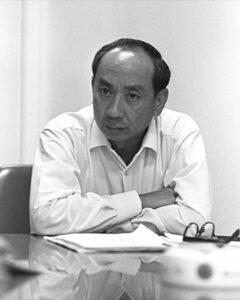
Goh Keng Swee (1918–2010) – Former Deputy Prime Minister and “architect” of modern Singapore’s education policies, emphasizing meritocracy and efficiency.
2. Philosophy & Core Principles of the Singapor Education System
The philosophy of the Singapor Education System combines meritocracy, rigor, and holistic development. It is strongly results-driven, with an emphasis on mathematics, science, and literacy, but it also integrates moral and character education. The government continuously adapts policies to balance academic excellence with creativity, resilience, and well-being.
Core Elements of the Singapor Education System
- Rigorous academic standards supported by structured curricula and frequent assessments.
- “Teach Less, Learn More” policy, introduced in 2004, encourages critical thinking, inquiry, and creativity rather than rote memorization.
- Bilingual policy – English as the main medium of instruction, alongside the compulsory study of a mother tongue language.
- Teacher development – teachers undergo continuous professional training and are highly respected.
- Merit-based progression – student advancement is based on performance, with multiple pathways to match different abilities and aspirations.
3. Current Structure of the Singapor Education System
Primary Education: 6 years, ending with the Primary School Leaving Examination (PSLE)
Secondary Education: Multiple streams (Express, Normal Academic, Normal Technical) based on PSLE results
Post-Secondary: Junior colleges, polytechnics, or the Institute of Technical Education
Higher Education: Renowned universities like National University of Singapore (NUS) and Nanyang Technological University (NTU)
4. Strengths & Challenges of the Singapor Education System
✅ Strengths:
The strengths of the Singapor Education System include:
- High academic achievement – students consistently top international benchmarks.
- Strong government planning – education policies are strategic and long-term, aligned with economic needs.
- Teacher quality – teachers are carefully selected, well-trained, and continuously developed.
- Bilingualism – students are equipped with both global and cultural competencies.
- Multiple pathways – the system provides different academic and vocational options, ensuring that diverse talents are nurtured.
At the same time, critics argue that the system is highly competitive and stressful for students. Concerns about exam pressure and limited creativity have prompted reforms such as reducing standardized testing in the early years and promoting more holistic assessments.
Despite these challenges, Singapor continues to stand out as a global leader in education. Its ability to balance meritocracy with inclusivity, rigor with innovation, and global standards with local identity ensures that it remains a model for countries seeking excellence in education.
⚠️ Challenges:
High academic pressure on students
Need to balance innovation with exam-oriented culture
5. PISA Ranking of the Singapor Education System
2022: Ranked #1 in the world in mathematics, reading, and science.
Global Recognition and PISA Results
Singapor consistently ranks at the top of the OECD’s Programme for International Student Assessment (PISA). In PISA 2022, Singapor was the highest-performing country across all domains: mathematics, reading, and science. Singaporean students not only excelled in academic achievement but also demonstrated strong problem-solving and critical thinking skills.
This global recognition highlights the system’s ability to combine rigorous content knowledge with skills relevant for the future. Singapor’s performance has made it a reference point for policymakers, educators, and researchers worldwide. Countries often send delegations to Singapor to study how its education system aligns with national economic goals while maintaining flexibility and innovation.
📚 More Reading on the Singapor Education System:
Lessons from Singapore – OECD → Policy analysis of Singapore’s success
Singapore Math: Teaching for Mastery – Yeap Ban Har → Understanding the famed math method
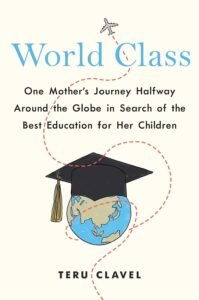
World Class: How to Build a 21st-Century School System – Andreas Schleicher → Includes deep insights on Singapore’s model
💡 Fun Fact: In Singapore, schools have “CCA” (Co-Curricular Activities) that are mandatory, ensuring students develop both academic and non-academic skills.

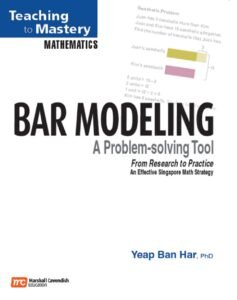
What they say about
OECD’s PISA rankings consistently place Singapor among the top performers in math, science, and reading. Reports emphasize the system’s rigorous standards, teacher quality, and focus on continuous improvement.